3PL vs In-House Warehouse for Apparel: A Decision Tree

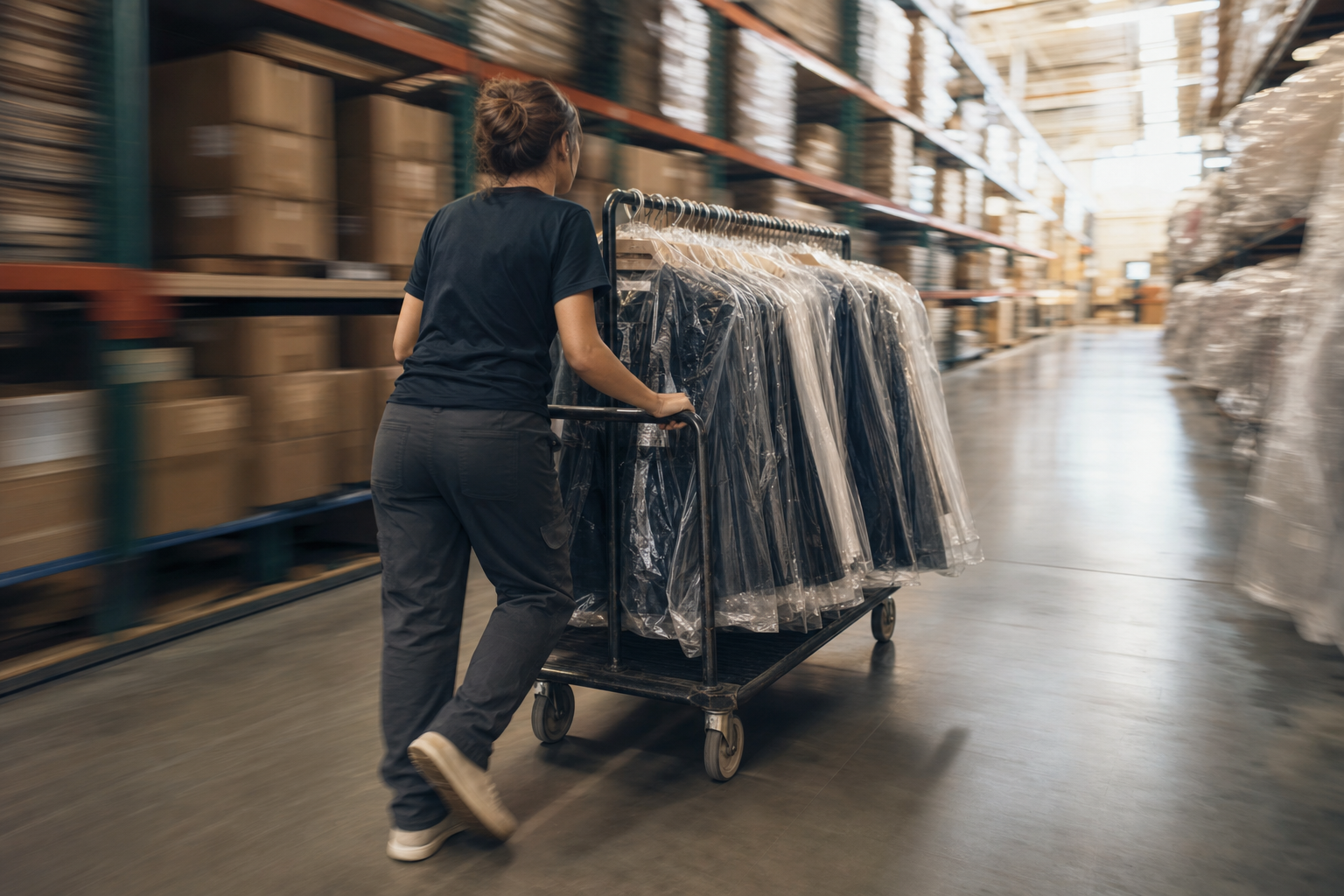
Picture a Tuesday at a $14M contemporary brand. The drop went live Sunday night. By Monday morning the 3PL has picked roughly 60 percent of DTC orders, the wholesale routing guide window for a department store PO closes Friday, and customer service is fielding tickets about a colorway that oversold by 80 units because the Shopify ATS did not know about the 200 units committed to a Nordstrom ASN. The ops lead is on a call with the 3PL asking why the wholesale carton labels printed without UCC-128 check digits. The 3PL says the WMS does not support that retailer’s spec out of the box. The brand is paying a $12 per carton chargeback. This is the moment the 3PL vs in-house warehouse apparel question stops being theoretical.
What does the 3PL vs in-house warehouse apparel decision actually come down to?
It comes down to who owns the exception path. A 3PL is excellent at the happy path: receive a clean ASN from the vendor, putaway, pick DTC orders against a single channel, ship via a small set of carriers. The cost per pick at that volume is almost always lower than running your own four-wall operation, once you load in rent, labor, WMS license, and management overhead. The math is not subtle.
The exception path is where the math breaks. Apparel exceptions are not edge cases. They are the job. A returned dress needs to be inspected, graded, and put back into sellable stock in a matter of days, because the season is short. A wholesale PO needs carton labels that match a 40-page routing guide that updates twice a year. A drop arrives in one container and needs to be cross-docked into DTC pick locations and wholesale staging in the same shift. A duty drawback claim on returned international DTC needs the original commercial invoice tied to the RMA. None of this is in the standard 3PL SLA.
So the real question is: how many of your weekly hours are spent on the exception path, and would you rather pay a vendor to handle them badly or pay yourself to handle them well?
How should an apparel brand define 3PL versus in-house in the first place?
A 3PL is a third party that owns the building, the labor, and the warehouse management system, and charges you per transaction (receipts, storage, picks, packs, returns, special projects). You integrate to their WMS through an EDI or API connection. You do not control their labor pool or their software roadmap. An in-house warehouse is a facility your brand leases or owns, staffed by your employees or a temp agency you manage, running a WMS you selected. You control the labor mix, the pick logic, the slotting, and the exception handling. A hybrid model splits channels: typically DTC at a 3PL and wholesale in-house, or the reverse. The decision is not binary, and treating it as binary is the most common mistake in vendor evaluations.
Why does this decision sit inside BP5 of the 6 Breakpoints?
Breakpoint 5 in the 6 Breakpoints of Apparel Operations framework is the point at which warehouse execution becomes less predictable, and it is where the 3PL blind spot lives. The breakpoint does not arrive because the warehouse is bad. It arrives because the brand’s order flow, channel mix, and SKU complexity outgrew the assumptions the 3PL was set up under. The contract was signed when the brand was 80 percent DTC and 200 SKUs. Two seasons later it is 55 percent wholesale, 600 SKUs, three drop windows, and an EDI relationship with a major department store. The 3PL did not get worse. The brand changed shape and the integration did not.
Whenever a buyer walks me through their warehouse shortlist, the same realization surfaces: the brand is not really evaluating 3PLs against in-house. It is evaluating whether the system layer above the warehouse can hide the difference. If inventory truth lives in one place and order routing is channel-aware, the warehouse becomes an execution node. If inventory lives in three places (Shopify, 3PL portal, wholesale spreadsheet), no warehouse choice will fix the problem.
What are the real costs people miss on both sides?
On the 3PL side, the line items that surprise brands are: special project fees for anything off the standard SOP (returns grading, ticketing, kitting, retailer-specific carton labeling), minimum monthly volumes that punish you in slow months, storage rate increases at renewal that are not in the original quote, and the integration cost of every new sales channel. The pick rate on the quote is rarely what you end up paying per order all-in. Build the model on cost per order shipped, not cost per pick.
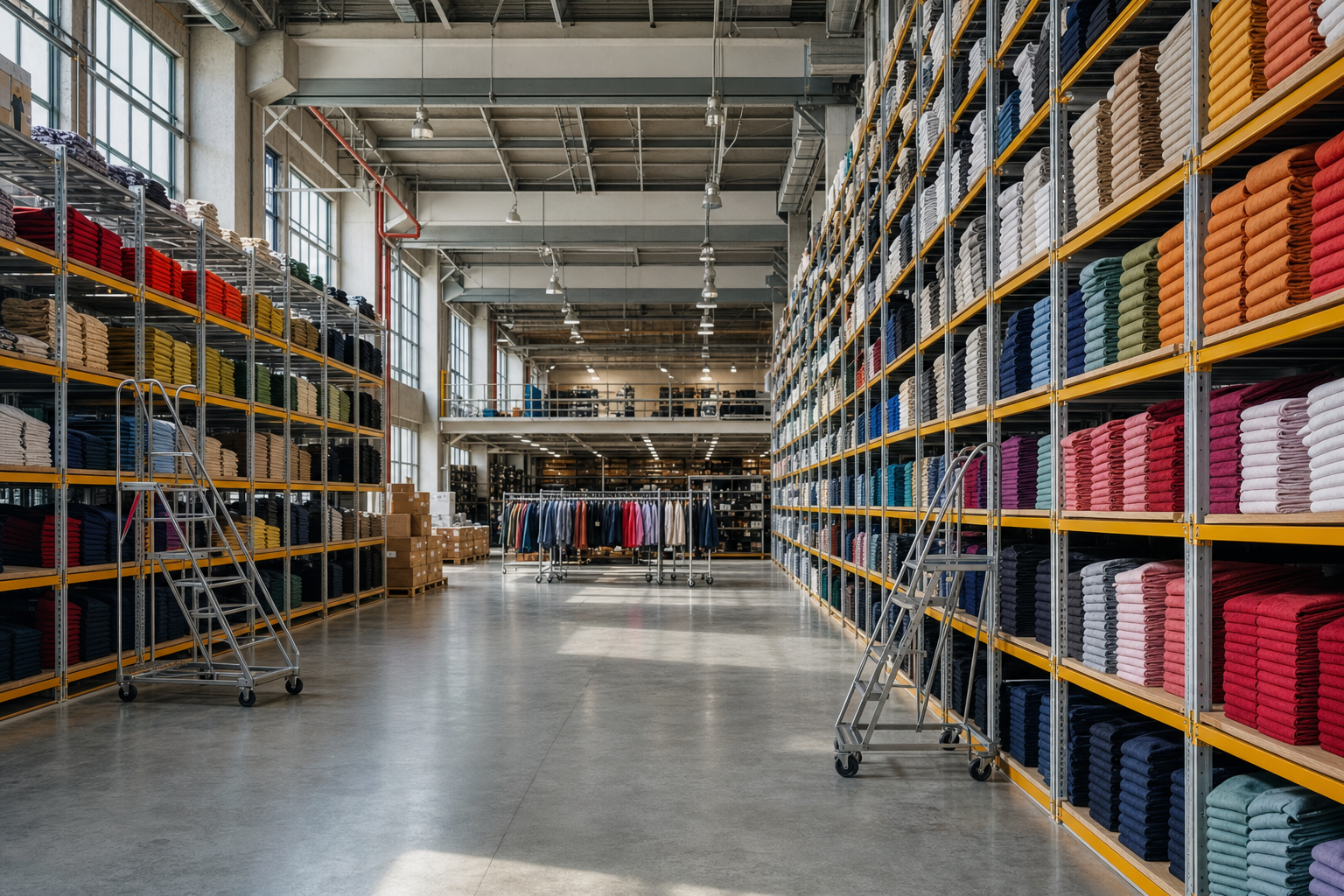
On the in-house side, the line items that get underestimated are: WMS licensing and implementation, the labor cost of peak coverage when you cannot flex down between drops, the carrying cost of being wrong on slotting decisions for a season, and the management bandwidth of running a warehouse team. A warehouse manager who can run a 40,000 square foot apparel facility with wholesale and DTC under one roof is a senior hire. That salary is real.
The number that almost no one models honestly is the cost of inventory inaccuracy. For a $15M brand running wholesale, DTC, and a 3PL, the back-of-envelope is six to nine hours a week spent tying out stock counts between Shopify, the 3PL portal, and the wholesale system, oversells on 2 to 3 percent of peak orders, and one full-time salary devoted to shuttling numbers between systems. That cost shows up regardless of who owns the building. It is a systems problem, not a warehouse problem.
When does a 3PL clearly win?
A 3PL wins when four conditions hold. First, DTC is more than 70 percent of order volume and the wholesale that exists is direct-to-store or small specialty, not major department stores with strict routing guides. Second, your active SKU count is under roughly 400 and your drop cadence is quarterly or slower. Third, returns volume is under 15 percent of DTC orders and you do not need returned units back into sellable stock within the same season. Fourth, you are under $10M in revenue and the management team does not have warehouse operations experience.
At that profile, the 3PL handles the work cleanly and the cost per order beats anything you could build. The right move is to pick a 3PL with apparel experience specifically, not a generalist that also does supplements and electronics. Apparel returns alone are a different operational discipline.
When does in-house clearly win?
In-house wins when the exception path dominates the week. The signals are: wholesale is more than 40 percent of revenue and includes at least one major retailer with a published routing guide, drops happen six or more times a year and each drop requires cross-dock plus staging, returns velocity matters because the season is eight weeks and you need units back on the floor in three days, and you have an ops leader who has run a warehouse before.
The brand that fits this profile is usually between $20M and $60M, mostly wholesale-led, and burning real money on 3PL chargebacks, special project fees, and missed ship windows. Bringing it in-house is not cheaper on a unit basis. It is cheaper on a total cost basis once you count the chargebacks you stop eating and the wholesale revenue you stop losing to cancelled POs. If your retailer chargebacks exceed 1 percent of wholesale revenue, the warehouse is not the root cause but it is where the cost is landing, and an in-house operation gives you the control to fix it.
What does the hybrid model actually look like?
Hybrid is the honest answer for most brands above $20M. The clean split is DTC at a 3PL, wholesale in-house. The 3PL gets a stable, predictable, high-velocity DTC operation it is good at. The in-house facility handles wholesale receiving, ticketing, retailer-compliant carton building, EDI 856 ASN generation tied to the pick, and the returns desk for both channels. Returns sit in-house because the inspection, grading, and putback decision is where the seasonal margin lives. Magnolia Pearl is an example of a brand where same-day fulfillment, drop cycles, and international duties on returns make the exception path the main path, and that profile does not survive a generalist 3PL relationship.
The hybrid model only works if inventory truth is unified. If the 3PL has its own ATS and the in-house WMS has its own ATS and Shopify has a third, you have built three breakpoints instead of one. The unifying layer has to sit above both warehouses and treat them as execution endpoints against a single channel-aware available-to-sell pool.
What is the decision tree?
Walk it in this order. Do not skip steps.
-
Is wholesale more than 40 percent of revenue and does it include a major retailer with a routing guide? If yes, in-house or hybrid. If no, continue.
-
Is your drop cadence six or more times per year with cross-dock requirements? If yes, in-house or hybrid. If no, continue.
-
Is returns velocity inside the season operationally critical? If yes, returns in-house at minimum, even if fulfillment stays at a 3PL. If no, continue.
-
Are you under $10M with no warehouse operations leadership on the team? If yes, 3PL, and pick one with apparel experience. If no, continue.
-
Are you between $10M and $20M, the band where disconnected stacks usually give out, with a channel mix that is shifting toward wholesale? If yes, start the in-house planning conversation now, because the lead time on a facility, a WMS, and a warehouse manager is twelve to eighteen months and the shift will outrun your readiness.
-
Are you above $20M with a stable DTC base and a growing wholesale book? If yes, hybrid is almost always the answer.
The tree does not produce a perfect answer. It produces a defensible one, which is what these decisions actually need.
What has to be true at the systems layer for either choice to work?
Whichever way the warehouse decision goes, three things have to be true above it. Inventory has to be channel-aware, meaning the system knows that 200 units are committed to a wholesale ASN and does not show them as available on Shopify. Order routing has to be deterministic, meaning the system decides which warehouse fulfills which order based on rules, not a human picking from a dropdown. And reporting has to tie picks, shipments, ASN transmissions, and chargebacks back to specific orders, retailers, and SKUs so you can see whether the cost of the warehouse is the warehouse or the integration.
Lufema is the kind of brand where this matters: multi-entity, multi-brand catalogs, a B2B portal that wholesale buyers actually use, and an inventory pool that has to behave correctly across all of it. The warehouse underneath, 3PL or in-house, is the easier half of the problem. The harder half is the system above it that prevents the inventory truth from drifting in the first place.
This is where the platform choice matters more than the warehouse choice. A brand on spreadsheets plus Shopify plus a 3PL portal plus a wholesale tool will fail at hybrid regardless of how good the buildings are. A brand running product data, production, inventory, orders, warehouse execution, payments, accounting, and reporting in one connected system can make either warehouse model work, because the warehouse is an execution endpoint, not a source of truth.
What the wrong warehouse call actually costs
Stop modeling this decision on cost per pick. Model it on cost per order shipped including chargebacks, returns processing, and the engineering hours spent integrating channels to warehouses. The 3PL quote will always look cheaper than the in-house model on a unit basis. That is not the question.
The question is whether your channel mix, drop cadence, and retailer compliance exposure put you in a profile where the exception path is the job. If it is, you either bring it in-house or you go hybrid with returns and wholesale under your own roof. If it is not, stay at a 3PL with apparel experience and invest the management bandwidth somewhere else.
Before you switch warehouses, fix the system above them. A new 3PL or a new in-house facility will not solve inventory truth, channel-aware ATS, or routing guide compliance. Those live in BP3, BP4, and BP5 of the framework, and they will follow you to the next building.
Where is your operation on the 6 Breakpoints curve?
The assessment scores your apparel operation across all six breakpoints (product data, production, inventory truth, order flow, warehouse execution, reporting) and identifies which one is hurting you most.
Frequently asked questions
Where this fits in the Uphance platform
Shubham writes about evaluating ERP fit, assessing operational complexity, and how apparel brands can tell whether their current systems are helping or holding them back. As a Solutions Consultant at Uphance, he runs discovery conversations and fit assessments for apparel brands moving off patchwork stacks of PLM, PIM, inventory, and B2B tools. His articles cover ERP selection, vendor RFPs, comparison frameworks, and the operational signals that tell a brand it has outgrown spreadsheets and point solutions. He focuses on how mid-market apparel teams evaluate connected platforms against the cost of staying with what they have.
Isabelle writes about onboarding, workflow enablement, and how apparel teams build confidence in connected operations during rollout and beyond. As a Customer Success and Onboarding Manager at Uphance, she partners with apparel brands through their first three weeks on the platform: configuration, training, and the tactical playbooks that get day-to-day workflows running. Her articles focus on how-to guidance for product, inventory, and order operations, written for the people who actually run the workflows. She covers when to use which configuration, how to write the training docs, and what the first thirty days inside a connected platform look like in practice.